

Employee turnover is one of the biggest pains for managers. Papers are published and conferences are arranged to talk about it.
But nothing seems to change.
The Great Resignation isn’t from the far past. It’s a recent showcase example of people quitting their jobs – in drives.
In today’s topic, I’ve brought you an obvious yet rarely applied pesticide for this menace. And it’s based on substantial research instead of someone’s sole opinions.
All Resignations are NOT Equal
I believe it’s necessary to remind you that there’s no need to buy into blind fear on this issue. It’s necessary to understand it first.
The general turnover figures that are pushed around do not tell the whole story.
A resignation by someone who is counterproductive for your team should be celebrated.
A resignation by a star is a loss.
A high rate of turnover of deadbeats is a positive omen. It means your culture is driving away slackers and making more space for A-players. And vice versa is true too.
So now whenever someone flashes a turnover percentage in front of you, make sure you also consider who left.
(In the remaining discussion, the word ‘turnover’ means ‘high performers quitting your team’)
Employee Turnover is Expensive
Employee turnover costs a fortune. It’s a constant nuisance for the business and HR leaders. Experts have put a dollar tag on turnover and the figures range from thousands to millions of dollars a year!
But as a team manager, your focus is more on the nonmonetary costs of employee turnover.
Let’s look at the top three:
Gaps in team chemistry: I’ve observed that a high-performing team is almost always a unique combo of different skills, knowledge, and personalities. Take out one and you’re at the risk of a domino effect. This can disrupt the team’s natural flow and make it difficult to retain the usual levels of creativity and productivity. Retention is essential for the magic to continue.
Loss of knowledge and expertise: The team may lose critical knowledge and expertise when one team member quits. It can take time to fill this gap. I’ve seen sharp declines in teams’ results as soon as only one person is moved out.
Damage to your team’s reputation: When an employee leaves, it can send a message to other employees that your team’s culture isn’t good enough. This can make it difficult to attract and retain top talent.
Employee Turnover Hurts
Here’s a typical quitting scenario that can feel like a kick in the guts.
John is a restless health tech prodigy brimming with revolutionary ideas. After hitting upon an idea for the ‘next big thing’, he soon got his product ready and hired a sales maestro, Jane, to push his shiny product into the market. Jane worked really hard and soon got in talks with a deep-pocketed investor and they agreed to the demo. John is finally beginning to get a sweet whiff of success. But two days before the big day, Jane calls in and says the two-word sentence that hits most employers like a bombshell, “I quit”. For John, this resignation can mean the difference between going public and closing shop for good because Jane was the one who had won the investor’s trust and John also knows that he’s not the best speaker.
Employers around the world experience the brunt of quitting employees. As the war for talent keeps getting fiercer, retaining your top players is becoming difficult by the day.
That is where the planning for employee retention kicks in to save the day. But it’s not that simple. While lots of efforts are being done to find solutions for stopping the talent drain, the silver bullet still hasn’t been invented yet. Until then, we will have to rely on piecing together the retention puzzle from whatever evidence is available.
The Research
The research I am sharing today is a piece of this jigsaw. This research carries not only the promise of lowering your employees’ turnover rate but also of boosting their commitment to the organization and satisfaction with their jobs.
Here is the crux of this research:
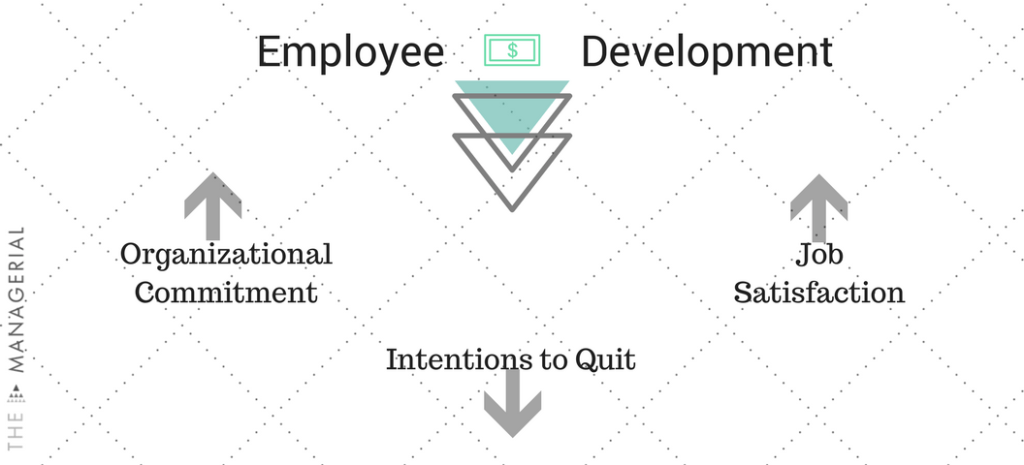
In their research, Chay Hoon Lee & Norman T. Bruvold found that just by investing in your employees’ development, you can:
- Increase their job satisfaction
- Increase their commitment to the organization, and
- Decrease their chances of quitting
Common wisdom hesitates to invest in an employee who is on the verge of switching her job. But data-backed research is telling us to invest more in such employees’ development to increase their chances of dropping the idea of calling it quits.
The simple solution is to make your people feel that you are interested in their development. And that can come only through your genuine concern.
Take Action
The question now is what exactly, you as a manager can do to lower the chances of your people quitting on you.
Companies normally allocate a budget for the learning and development (L&D) of their employees. Talk to your HR to find out if you don’t have the figures.
Find out if there’s already an L&D amount allotted to your team. If yes, plan your team’s development with two important considerations:
1. Fairness is crucial. Every team member must feel that the budget allotted to her is fair and that she’s not being treated unfairly in comparison with another team member.
2. Find their Calling. Find their passion that can be embedded in their jobs and try to develop them in that direction. It’ll act as a multiplier in terms of their commitment to you and the organization.
If your team hasn’t been allocated an L&D budget, keep developing their skills and knowledge using strategies that don’t cost you a dime. Here are just a few to get you going:
- Arrange a fireside chat with an expert and let your team learn from her experience and knowledge.
- Make coaching an essential part of your team interactions. Use your own experience to help them improve.
- Suggest free learning resources like online courses and thought leaders. Keep a follow-up to make sure they do indulge in that resource and pick up valuable learnings.
- Read together. Get title suggestions, ask everyone to read on their own time, and sit down to discuss the main points from the book.
You should also make a strong case to the top management to get a reasonable L&D budget for your team. Just by knowing that you’re making genuine efforts for their development, you’ll win your team’s loyalty and commitment.